AIIS Elder-in-Residence
Program Overview
The Elder-in-Residence program strives to improve the experience of students by hosting Indigenous Elders on campus to share their knowledge and cultural wisdom. It provides students with access to crucial cultural resources while strengthening partnerships between Tribal Nations and the University. In doing so, the program aims to enhance the campus experience and improve student retention. Tribal Elders are invited from across the country and bring unique backgrounds, knowledge, and wisdom to share with the campus community. This program raises awareness of Indigenous cultures and communities while integrating Indigenous knowledge into campus learning and engagement.
Fall 2026 Elder-in-Residence
The Fall 2026 Elder-in-Residence details will be shared here!
Past AIIS Elder-in-Residence
Inaugural Elder-in-Residence
Fall 2018
ADA DEER
(1935-2023)
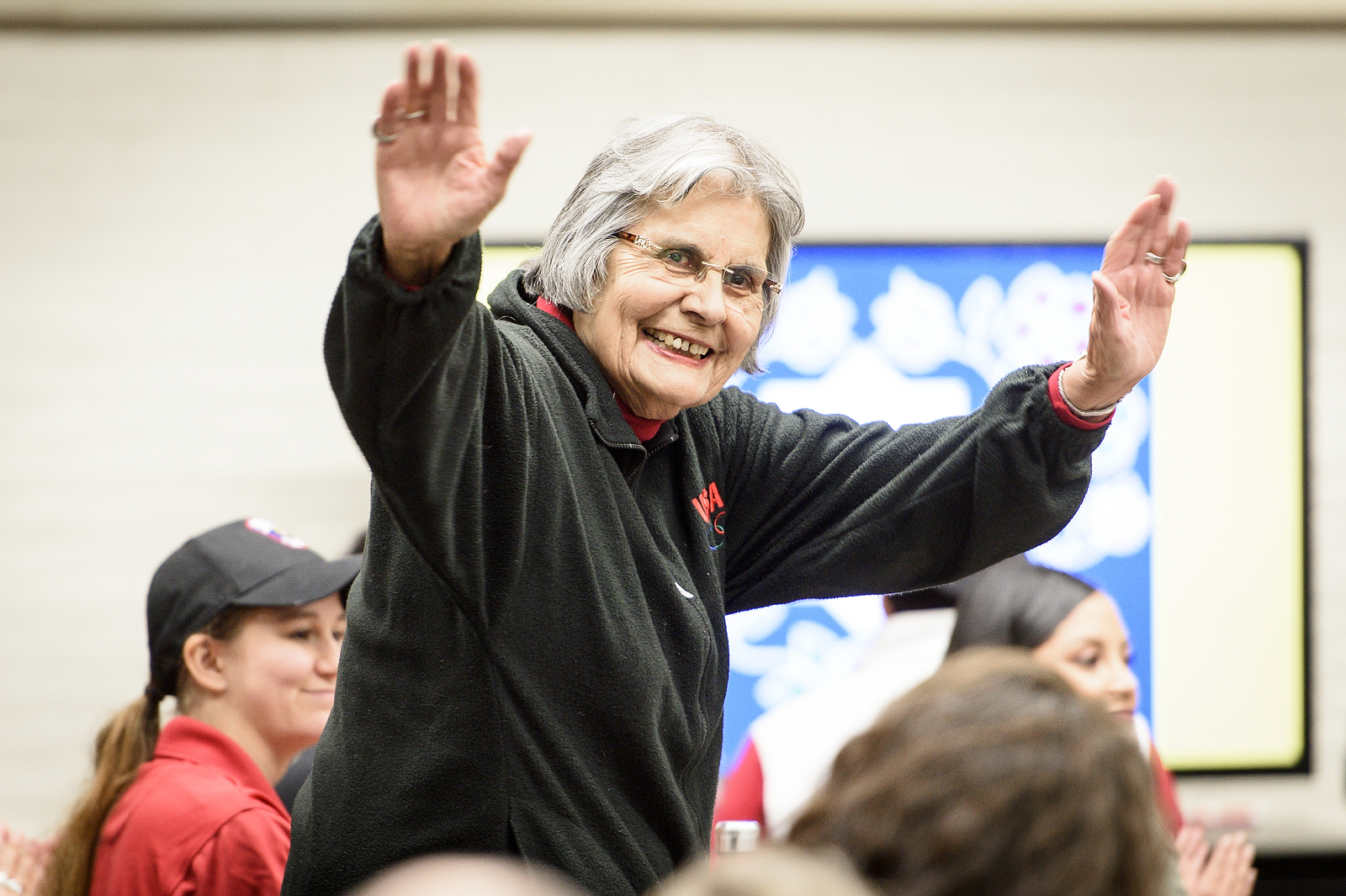
Ada E. Deer, a member of the Menominee Nation, was not only a leader in her community but also across Indian country. In 1957 she became the first Indigenous woman and the first member of her Tribe to earn an undergraduate degree from UW–Madison. She then became a nationally recognized social worker and served in various capacities as a political leader and Indigenous rights activist. She was the first woman Chair of the Menominee Nation and helped to restore federal recognition of the Menominee Tribe. She was also the first Indigenous woman to run for Congress in Wisconsin and was the Assistant Secretary of Indian Affairs in the Department of the Interior during the Clinton administration. She was a groundbreaking innovator and role model for many Indigenous communities.
________________
Spring 2026
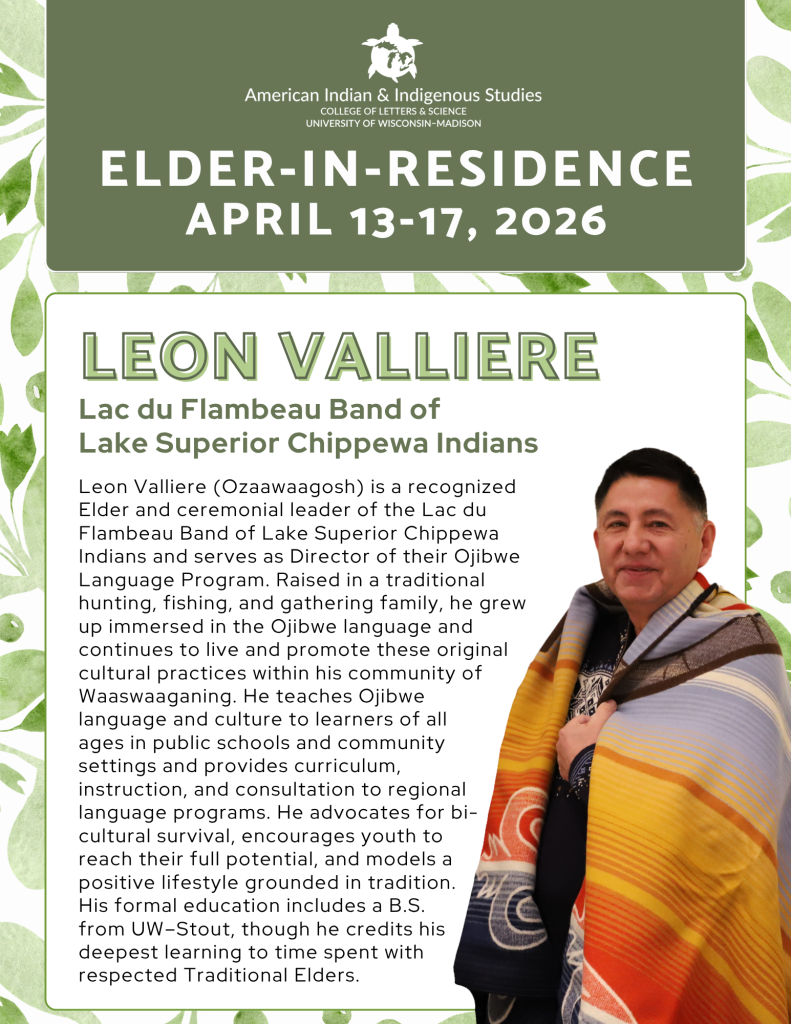
LEON VALLIERE
Lac Du Flambeau Band of the Lake Superior Chippewa
Leon Valliere (Ozaawaagosh) is a recognized Elder and ceremonial leader of the Lac du Flambeau Band of Lake Superior Chippewa Indians and serves as Director of their Ojibwe Language Program. Raised in a traditional hunting, fishing, and gathering family, he grew up immersed in the Ojibwe language and continues to live and promote these original cultural practices within his community of Waaswaaganing. He teaches Ojibwe language and culture to learners of all ages in public schools and community settings and provides curriculum, instruction, and consultation to regional language programs. He advocates for bi-cultural survival, encourages youth to reach their full potential, and models a positive lifestyle grounded in tradition. His formal education includes a B.S. from UW–Stout, though he credits his deepest learning to time spent with respected Traditional Elders.
Fall 2025
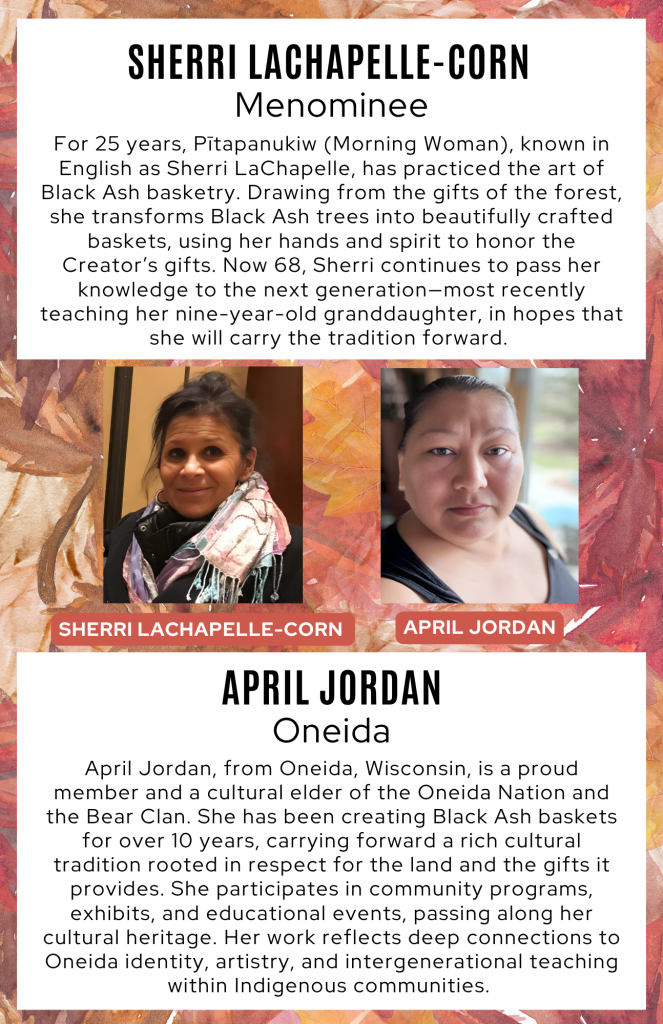
SHERRI LACHAPELLE-CORN
Menominee
For 25 years, Pītapanukiw (Morning Woman), known in English as Sherri LaChapelle, has practiced the art of Black Ash basketry. Drawing from the gifts of the forest, she transforms Black Ash trees into beautifully crafted baskets, using her hands and spirit to honor the Creator’s gifts. Now 68, Sherri continues to pass her knowledge to the next generation—most recently teaching her nine-year-old granddaughter, in hopes that she will carry the tradition forward.
APRIL JORDAN
Oneida
April Jordan, from Oneida, Wisconsin, is a proud member and a cultural elder of the Oneida Nation and the Bear Clan. She has been creating Black Ash baskets for over 10 years, carrying forward a rich cultural tradition rooted in respect for the land and the gifts it provides. She participates in community programs, exhibits, and educational events, passing along her cultural heritage. Her work reflects deep connections to Oneida identity, artistry, and intergenerational teaching within Indigenous communities.
Spring 2025
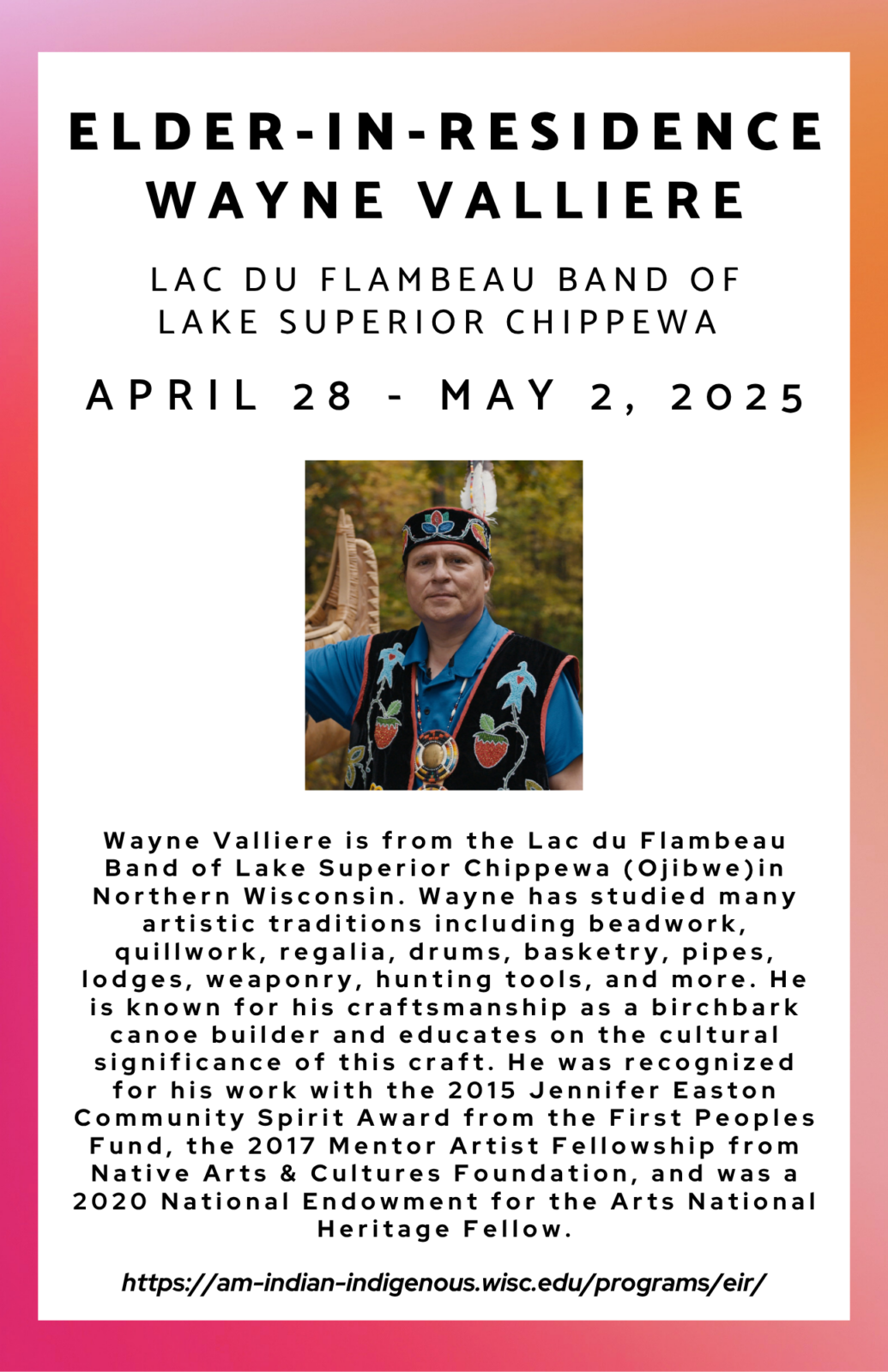
WAYNE VALLIERE
Lac Du Flambeau Band of the Lake Superior Chippewa
Wayne Valliere is from the Lac du Flambeau Band of Lake Superior Chippewa (Ojibwe)in Northern Wisconsin. Wayne has studied many artistic traditions including beadwork, quillwork, regalia, drums, basketry, pipes, lodges, weaponry, hunting tools, and more. He is known for his craftsmanship as a birchbark canoe builder and educates on the cultural significance of this craft. He was recognized for his work with the 2015 Jennifer Easton Community Spirit Award from the First Peoples Fund, the 2017 Mentor Artist Fellowship from Native Arts & Cultures Foundation, and was a 2020 National Endowment for the Arts National Heritage Fellow.
Fall 2024
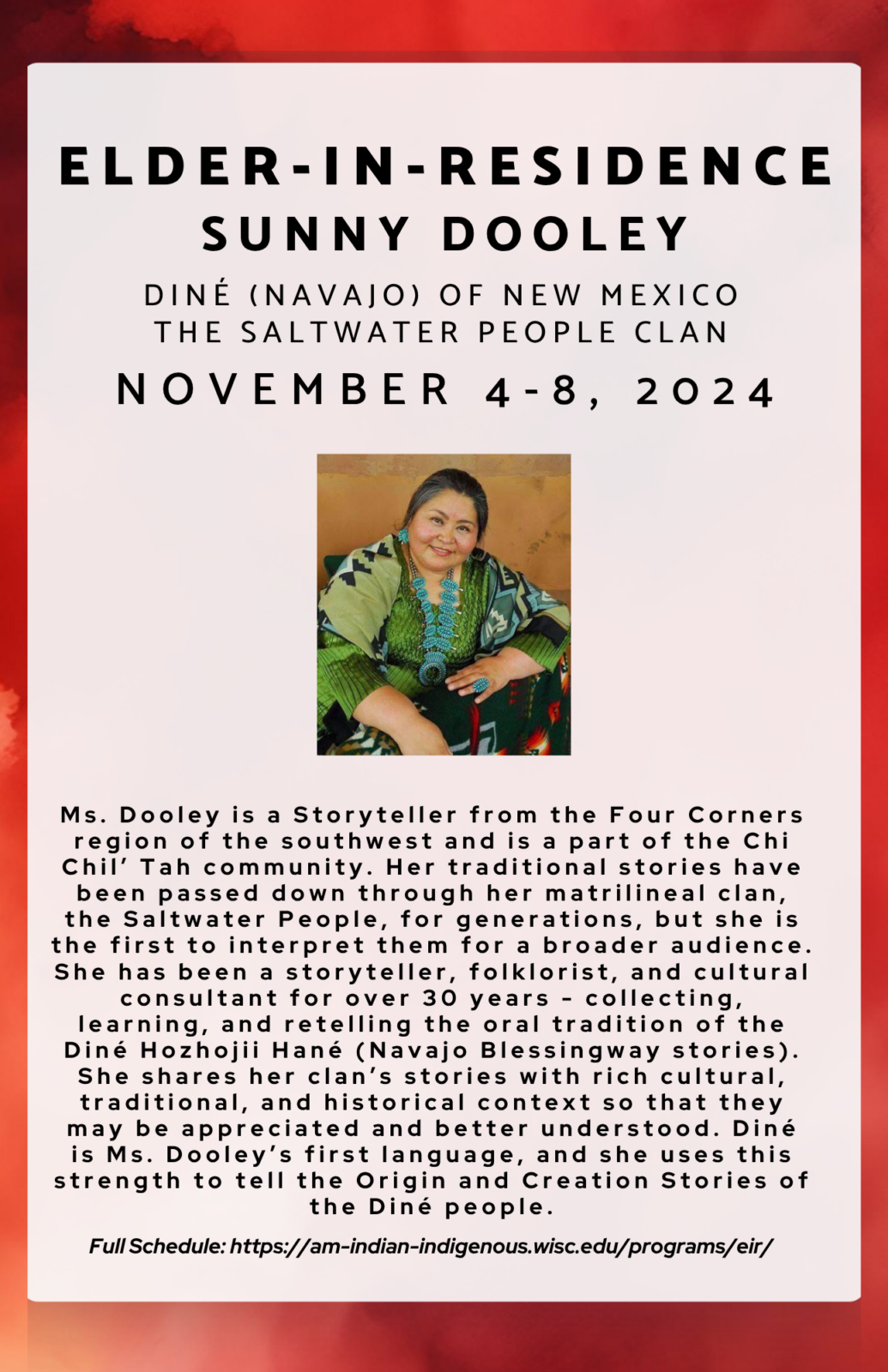
SUNNY DOOLEY
Lac Du Flambeau Band of the Lake Superior Chippewa
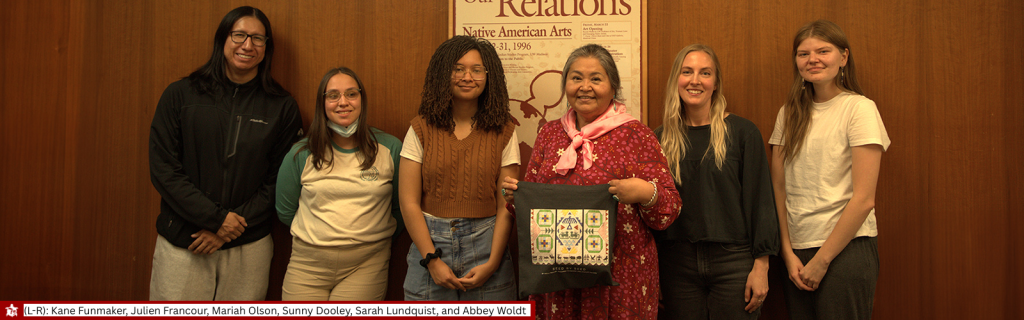
Ms. Dooley is a Storyteller from the Four Corners region of the southwest and is a part of the Chi Chil’ Tah community. Her traditional stories have been passed down through her matrilineal clan, the Saltwater People, for generations, but she is the first to interpret them for a broader audience. She has been a storyteller, folklorist, and cultural consultant for over 30 years – collecting, learning, and retelling the oral tradition of the Diné Hozhojii Hané (Navajo Blessingway stories). She shares her clan’s stories with rich cultural, traditional, and historical context so that they may be appreciated and better understood. Diné is Ms. Dooley’s first language, and she uses this strength to tell the Origin and Creation Stories of the Diné people.
Fall 2024
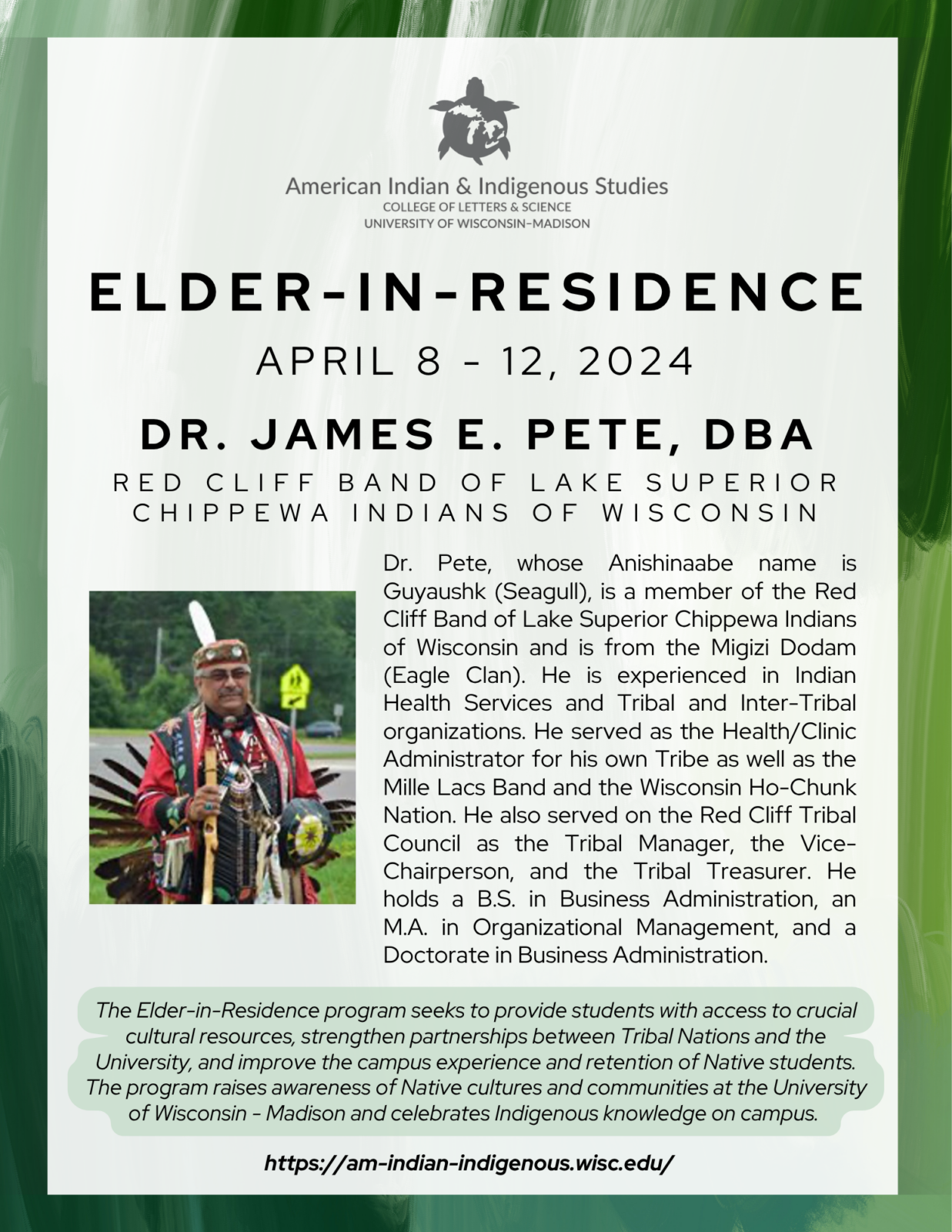
DR. JAMES E. PETE
Red Cliff Band of Lake Superior Chippewa Indians of Wisconsin
Dr. Pete, whose Anishinaabe name is Guyaushk (Seagull), is a member of the Red Cliff Band of Lake Superior Chippewa Indians of Wisconsin and is from the Migizi Dodam (Eagle Clan). He is experienced in Indian Health Services and Tribal and Inter-Tribal organizations. He served as the Health/Clinic Administrator for his own Tribe as well as the Mille Lacs Band and the Wisconsin Ho-Chunk Nation. He also served on the Red Cliff Tribal Council as the Tribal Manager, the Vice-Chairperson, and the Tribal Treasurer. He holds a B.S. in Business Administration, an M.A. in Organizational Management, and a Doctorate in Business Administration.
Fall 2023
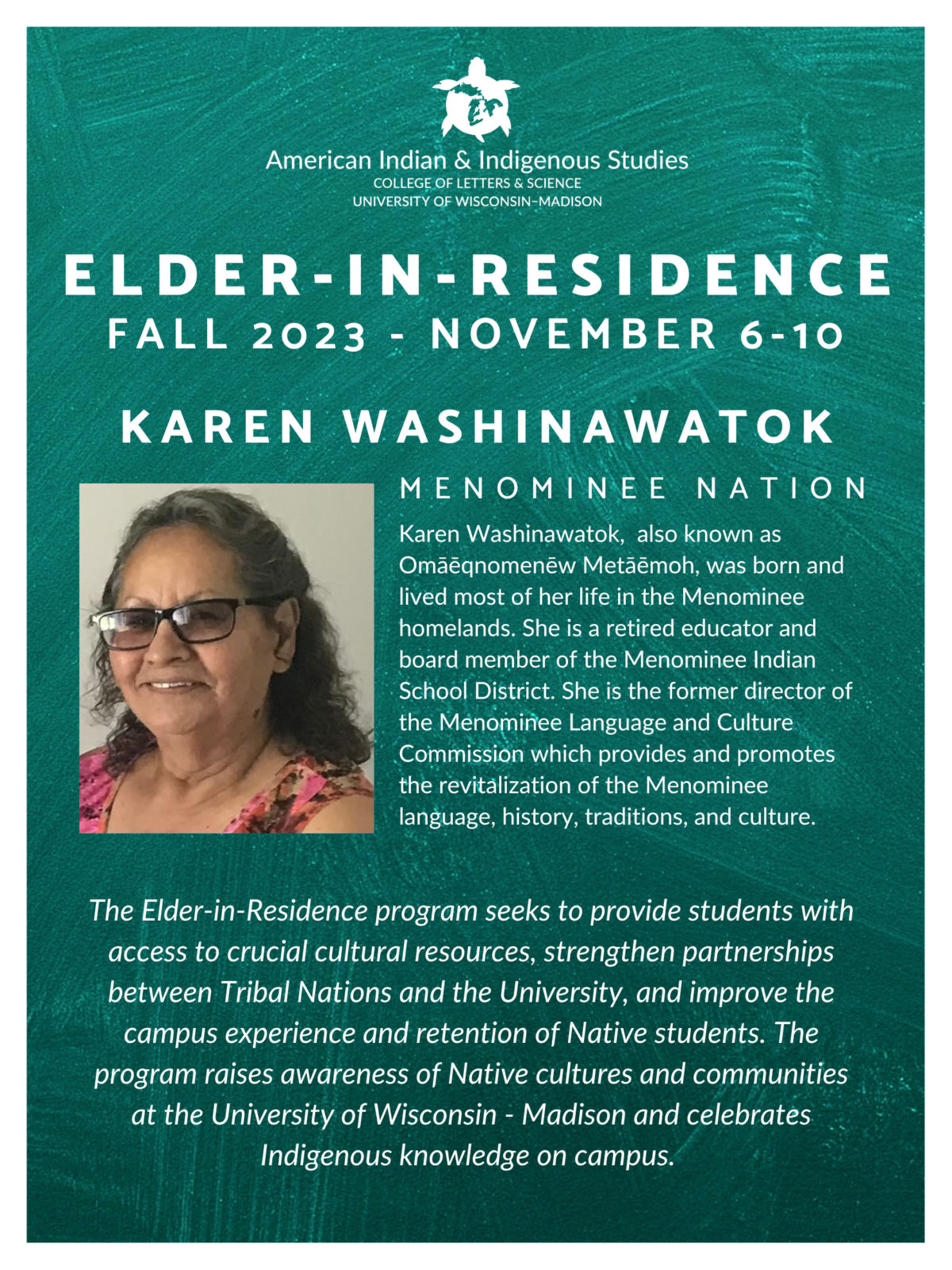
KAREN WASHINAWATOK
Menominee
Karen Washinawatok, also known as Omāēqnomenēw Metāēmoh, was born and lived most of her life in the Menominee homelands. She is a retired educator and board member of the Menominee Indian School District. She is the former director of the Menominee Language and Culture Commission which provides and promotes the revitalization of the Menominee language, history, traditions, and culture.
Fall 2022
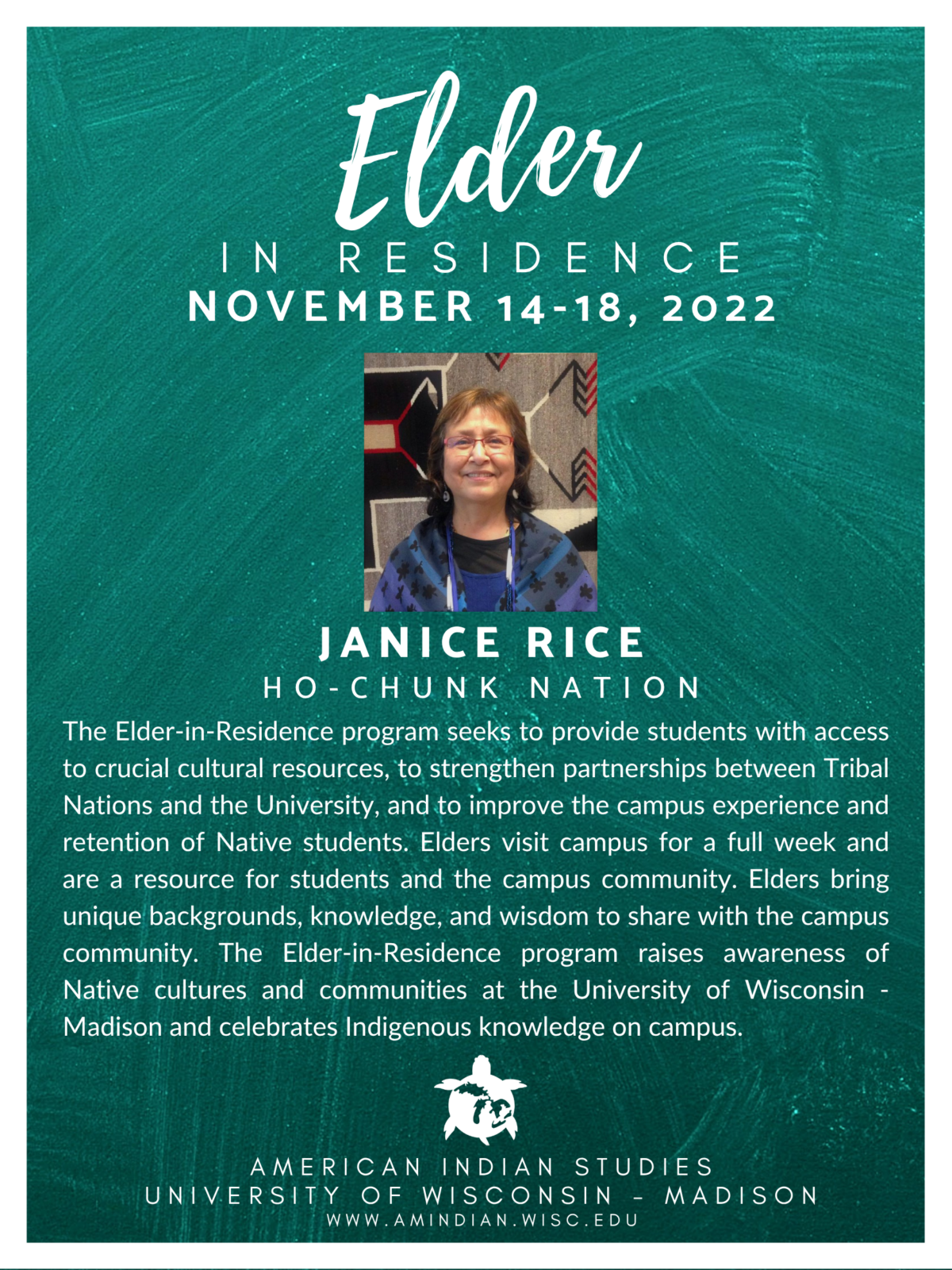
JANICE RICE
Ho-Chunk/Hoçak
Janice Rice is a Peacemaker for the Ho-Chunk Nation Trial Court, a Clan Mother for Ho-Chunk Nation Social Services, and a past president of the American Indian Library Association. She serves on the boards of the Ho-Chunk Nation Museum and Cultural Center and Little Eagle Arts Foundation and is an advisor to the Teejop Community History Project.
Janice holds degrees in Education and Library Science and has worked extensively in Indigenous education, librarianship, cultural preservation, and language revitalization. She has taught at the UW–Madison Information School and served as a Hoocąk language tutor in Madison schools. A recipient of Women of Color awards from UW–Madison and the Universities of Wisconsin, she remains active in Ho-Chunk historical research, cultural and museum projects, and Hoocąk language revitalization.
Spring 2019
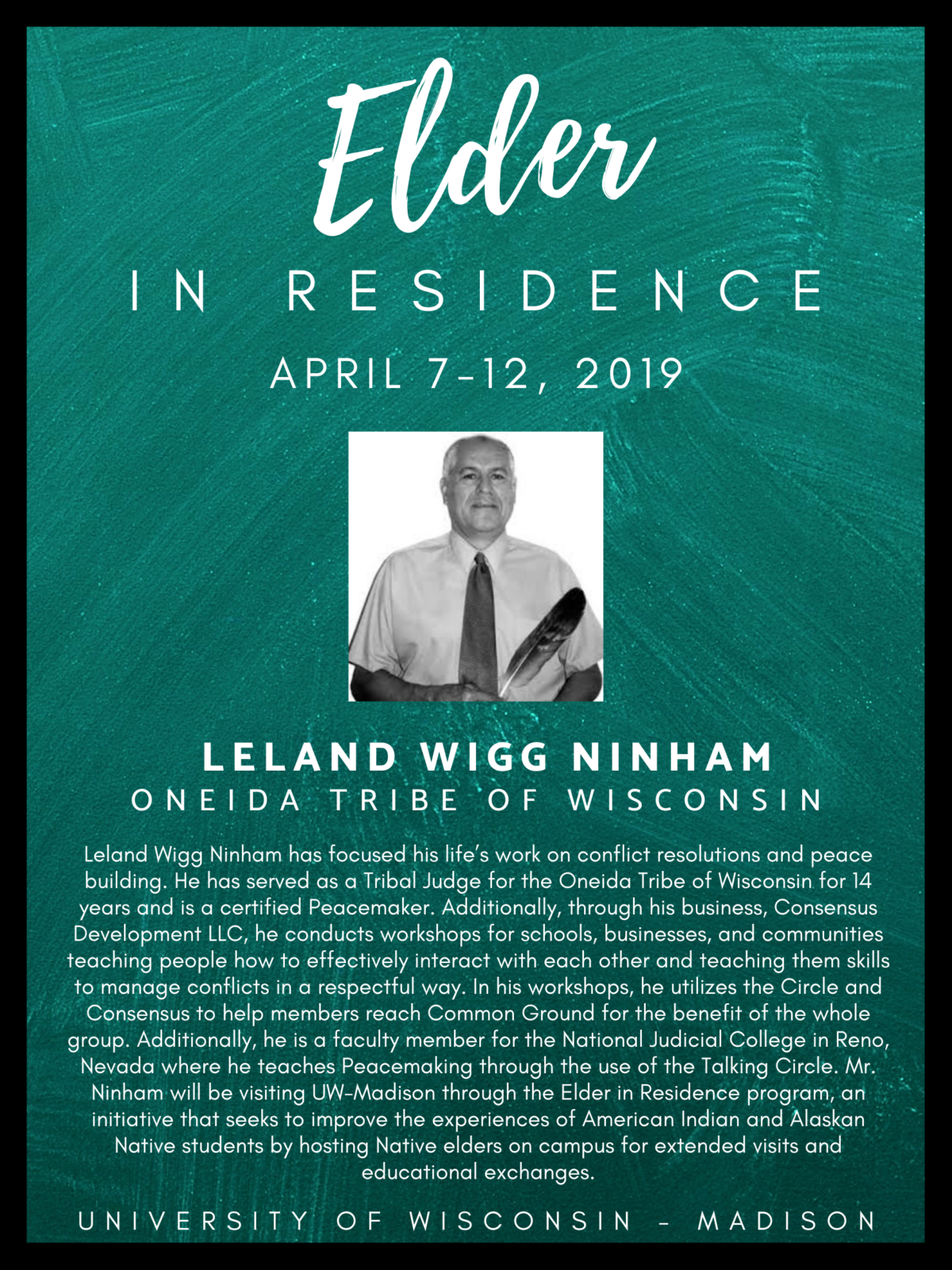
LELAND WIGG-NINHAM
Oneida
Leland Wigg Ninham has focused his life’s work on conflict resolutions and peace building. He has served as a Tribal Judge for the Oneida Tribe of Wisconsin for 14 years and is a certified Peacemaker. Additionally, through his business, Consensus Development LLC, he conducts workshops for schools, businesses, and communities teaching people how to effectively interact with each other and teaching them skills to manage conflicts in a respectful way. In his workshops, he utilizes the Circle and Consensus to help members reach Common Ground for the benefit of the whole group. Additionally, he is a faculty member for the National Judicial College in Reno, Nevada where he teaches Peacemaking through the use of the Talking Circle. Mr. Ninham will be visiting UW–Madison through the Elder in Residence program, an initiative that seeks to improve the experiences of American Indian and Alaskan Native students by hosting Native elders on campus for extended visits and educational exchanges.
Fall 2018
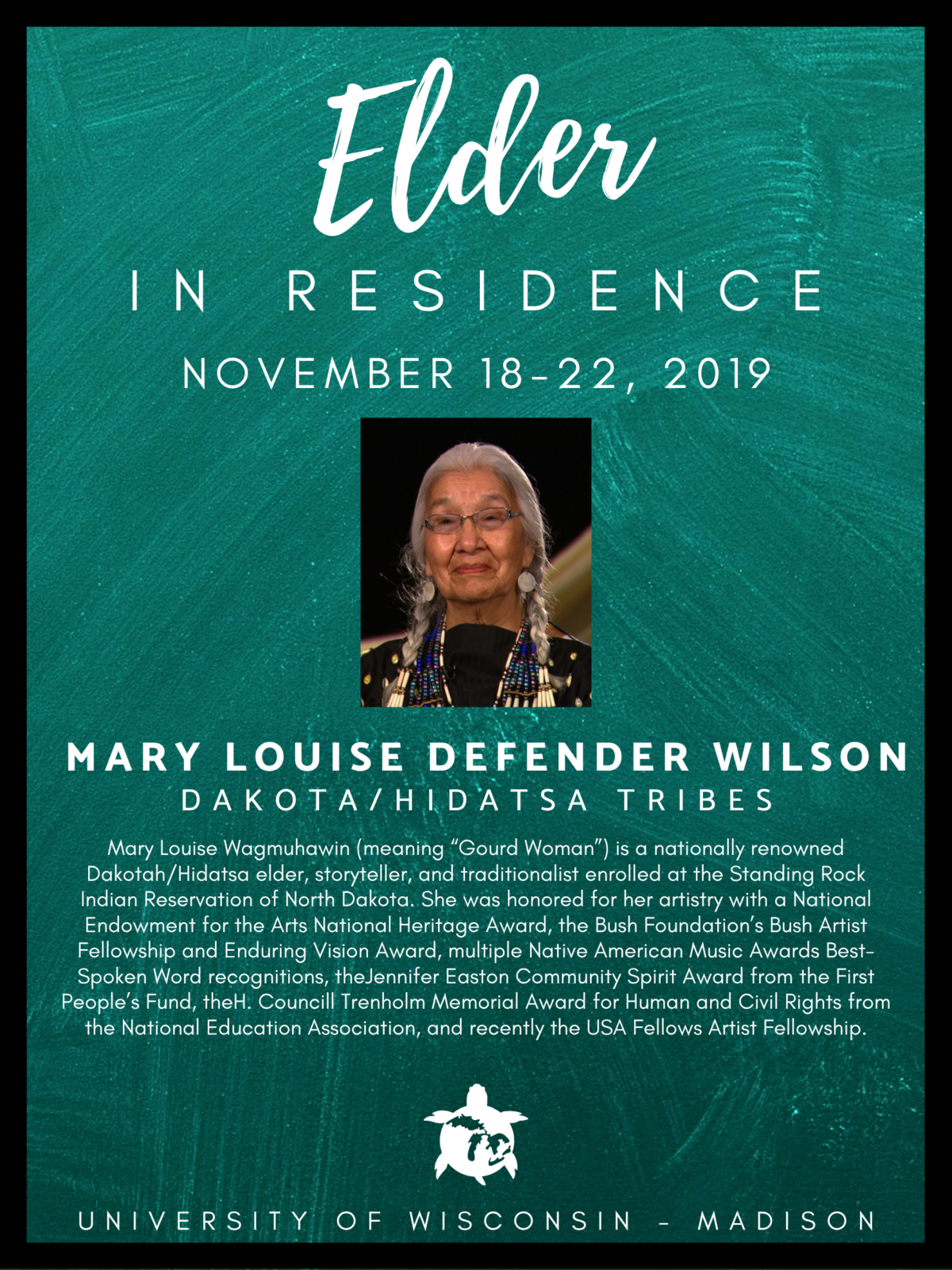
MARY LOUISE DEFENDER-WILSON
Dakotah/Hidatsa
Mary Louise (Wagmuhawin meaning “Gourd Woman”) is a nationally renowned traditional Dakotah/Hidatsa elder, storyteller, and traditionalist enrolled at the Standing Rock Indian Reservation of North Dakota. Born on October 14, 1930, and delivered by her midwife grandmother, Mary Louise grew up in a small house with her mother, three older brothers, her grandfather, and her great-aunt. Not only were Mary Louise’s mother, grandmother, and great-grandmother midwives, they were also skilled storytellers. It is these people and others from whom Mary Louise learned traditional stories. She has been honored for her artistry with a National Endowment for the Arts National Heritage Award, the Bush Foundation’s Bush Artist Fellowship and Enduring Vision Award, multiple Native American Music Awards Best-Spoken Word recognitions, theJennifer Easton Community Spirit Award from the First People’s Fund, theH. Councill Trenholm Memorial Award for Human and Civil Rights from the National Education Association, and recently the USA Fellows Artist Fellowship.