About Us
Mission
The American Indian & Indigenous Studies (AIIS) Program is dedicated to fostering an inclusive environment where the university community can explore and understand the rich cultures, traditions, and values of American Indian and Indigenous peoples. Our mission is to not only educate but also empower students, equipping them with the leadership skills necessary to excel academically and make meaningful contributions to their communities. We also offer consultation, referral services, and community engagement programs that support student learning and academic success.
Our History
For more than five decades, American Indian & Indigenous Studies (AIIS) has been an important part of teaching, scholarship, student support, and community engagement at the University of Wisconsin–Madison.
Established in 1972, AIIS has grown into an interdisciplinary program connecting students and scholars across the University with Tribal Nations and Indigenous communities. Throughout its history, the program has created opportunities to study American Indian and Indigenous histories, cultures, languages, and contemporary experiences while supporting generations of students through coursework, mentorship, academic programs, and community engagement.
Today, AIIS continues to build on this foundation through Indigenous language instruction, the AIIS Certificate, the Elder-in-Residence Program, the annual Evening of Storytelling, the AIIS Colloquium Series, and partnerships across the University and with Tribal communities.
More Than 50 Years of AIIS
The history of American Indian & Indigenous Studies at UW–Madison begins with Native students who organized, advocated for change, and called on the University to better serve American Indian students and communities. Their efforts helped create an academic home for American Indian Studies and laid the foundation for the program that continues today.
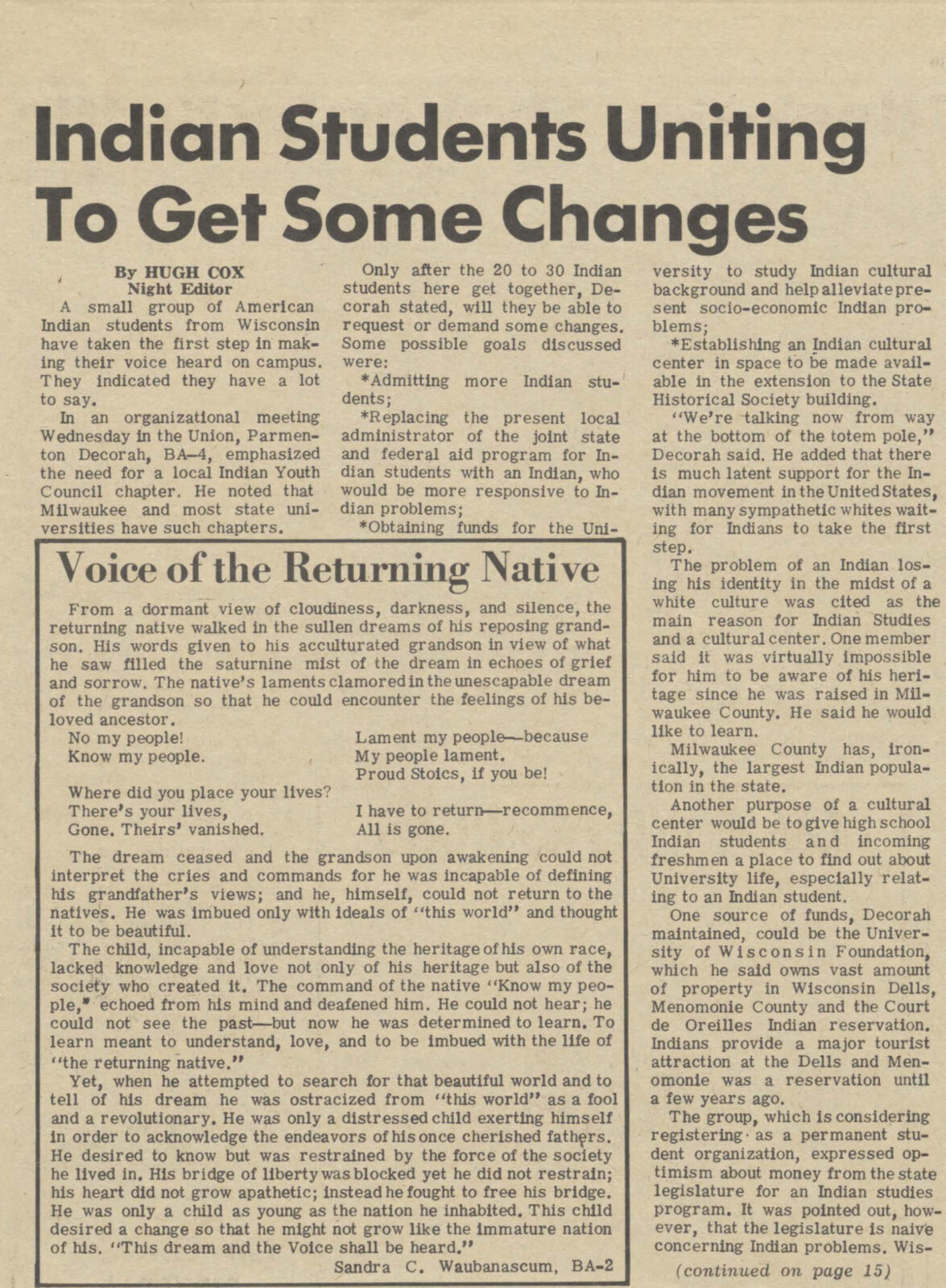
1968–1970 — Native Students Organize for Change
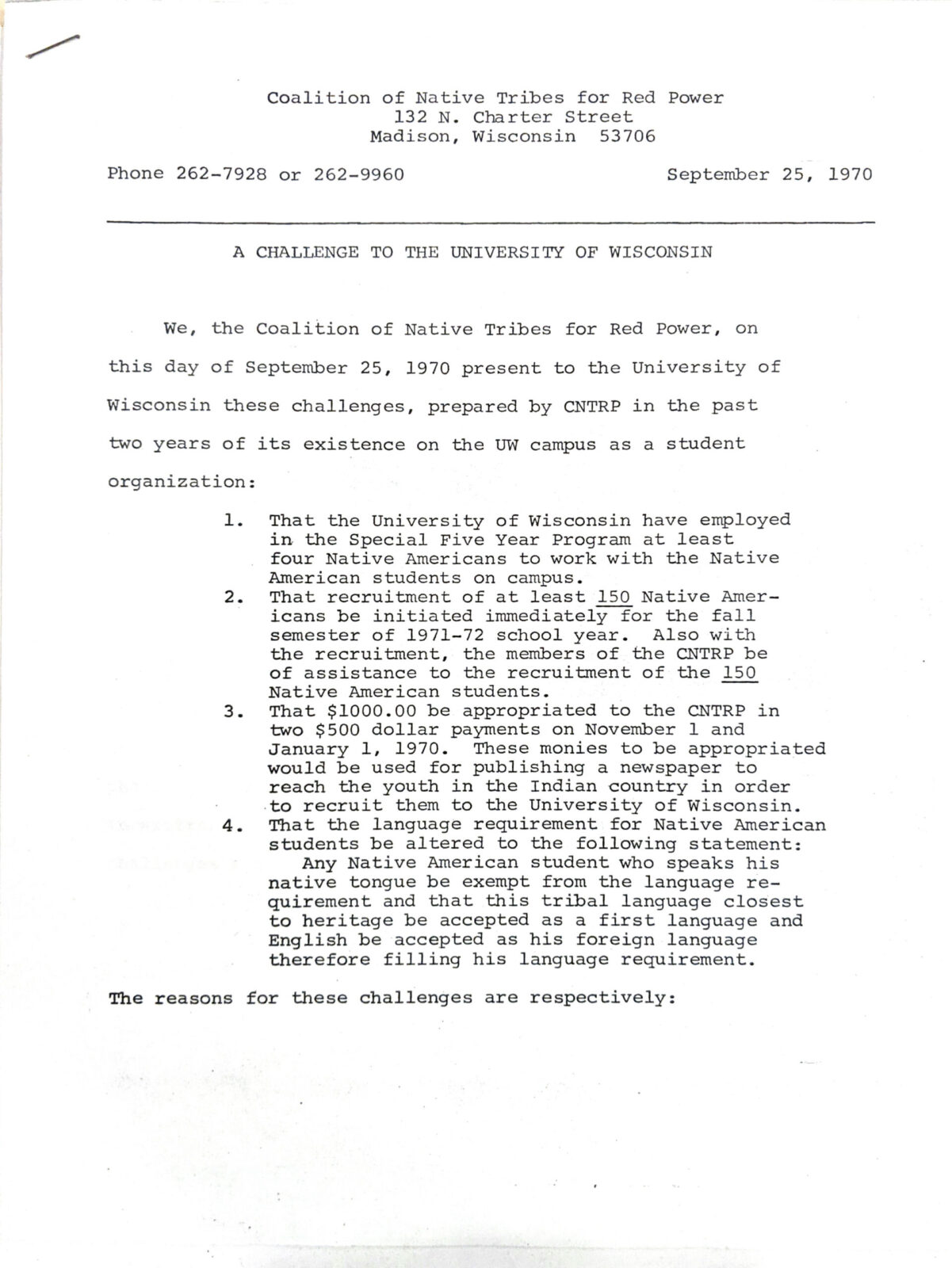
The Wisconsin Indian Student Movement was established in 1968, followed by growing efforts among Native students to organize and advocate for greater representation and support at UW–Madison. In 1970, students formed the Coalition of Native Tribes for Red Power (CNTRP). The group challenged the University to recruit and support more Native students, employ Native staff, and expand opportunities to study American Indian histories, cultures, languages, and contemporary issues.
1971 — Building an Academic Home
Native students joined the University’s Ad-Hoc Committee on Native American Programs and advocated for the creation of an academic home for American Indian Studies. In June 1971, the committee formally recommended expanding American Indian Studies courses and establishing a permanent academic program. Chancellor Edwin Young endorsed its recommendations that July. Native students also established Wunk Sheek, creating an organization that would become an enduring part of the Native community at UW–Madison.
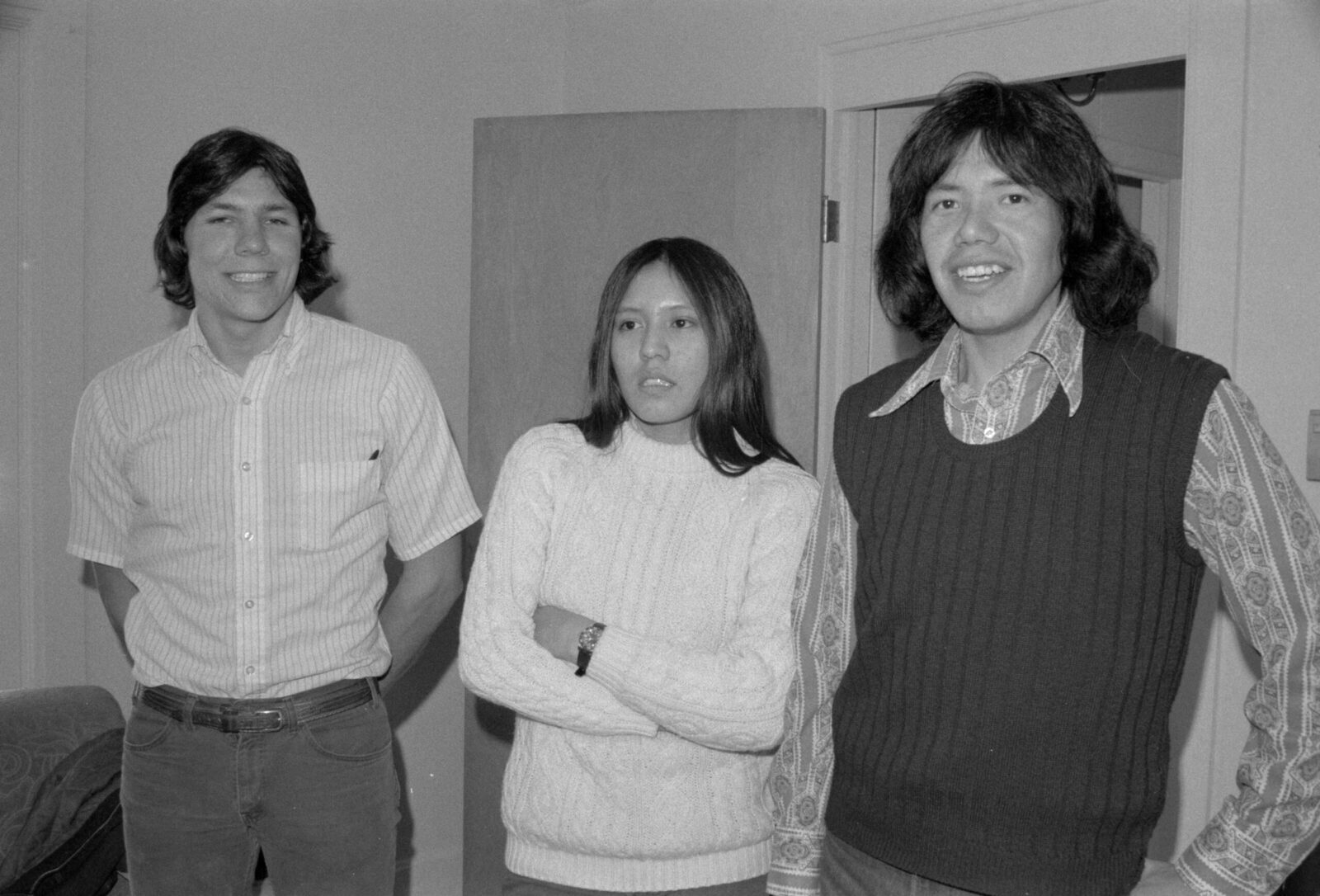
1972 — American Indian Studies is Established
The American Indian Studies Program was established at UW–Madison. Its initial mission focused on developing American Indian Studies courses, recruiting American Indian faculty, and serving as a connection between American Indian students and the broader University.
1973–1975 — Early Leadership
John Niemisto, a recent graduate of the UW Law School and one of the Native students involved in the movement to establish American Indian Studies, became the program’s first coordinator. In 1975, artist and educator Truman Lowe succeeded Niemisto and continued the development of the young program.
1976–1977 — Expanding the Program’s Role
In 1976, the program broadened its efforts to increase awareness and understanding of American Indian cultures and contemporary issues throughout the campus community. The program also moved from the UW Law School to the School of Education. In 1977, Ada Deer joined as a lecturer responsible for curriculum development and faculty recruitment. She would later serve as Director and play an important role in the program’s development for decades.
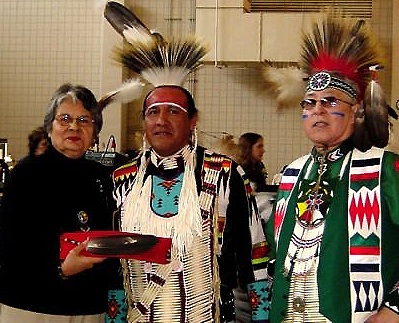
1987–1988 — A New Name and Academic Home
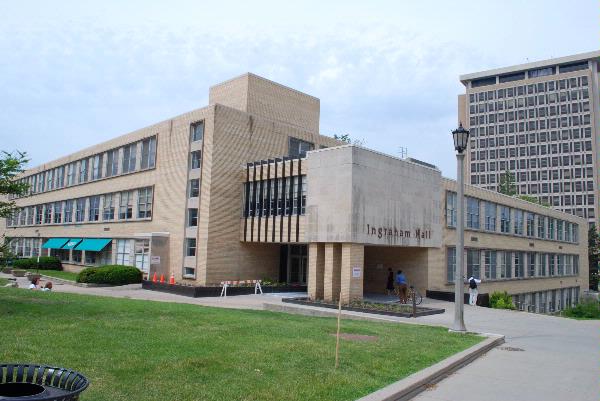
The Native American Studies Program became the American Indian Studies Program during the 1987–88 academic year. In 1988, the program was elevated in status and permanently transferred from the School of Education to the College of Letters & Science, with its offices moving to Ingraham Hall.
1995–1997 — The Certificate is Established
In 1995, affiliated faculty unanimously approved a proposal to establish a Certificate in American Indian Studies. The Certificate was first offered in 1997, creating a formal interdisciplinary academic pathway for undergraduate students to pursue the study of American Indian histories, cultures, languages, and contemporary experiences.
2022 — Celebrating 50 Years
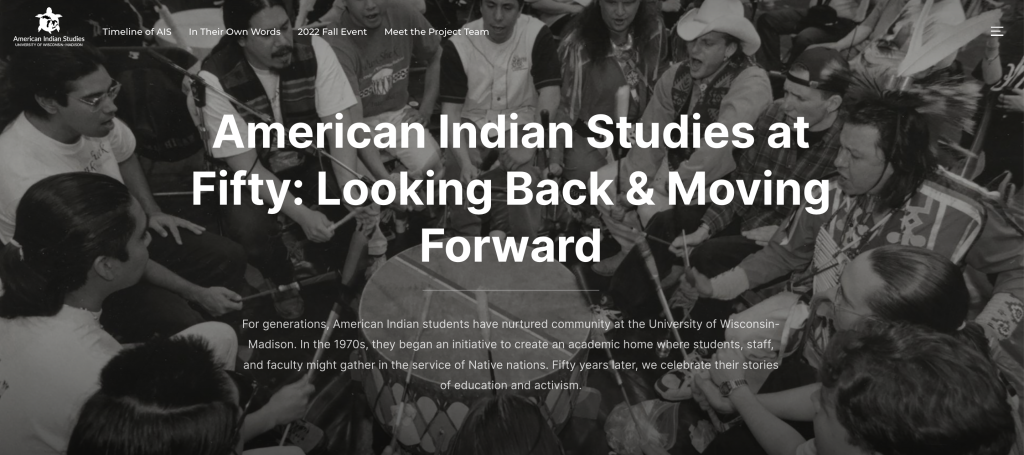
American Indian Studies celebrated its 50th anniversary at UW–Madison. The anniversary honored the Native students whose activism led to the program’s creation while recognizing five decades of teaching, scholarship, student support, and engagement with Native Nations and communities. You can also visit the oral history project website to learn more!
2023 — American Indian & Indigenous Studies
The program officially became American Indian & Indigenous Studies (AIIS), reflecting the breadth of its interdisciplinary teaching, scholarship, and engagement with Indigenous peoples and communities.

Fall 2026 — A New Home in Levy Hall
AIIS moved to a new home in Levy Hall, beginning the next chapter in the program’s more than 50-year history at UW–Madison.
Today — Continuing the Work
Building on the work of the students, faculty, staff, and community members who shaped the program, AIIS continues to advance Indigenous education and scholarship through interdisciplinary coursework, Indigenous language instruction, student support, research, public programming, and relationships with Tribal Nations and Indigenous communities.
Indigenous History at UW–Madison
UW–Madison is located in Teejop (Four Lakes), the ancestral homeland of the Ho-Chunk people and a place with thousands of years of Indigenous history and continued presence. Explore the resources below to learn more about the land, people, and histories that shape the University and the greater Madison area.
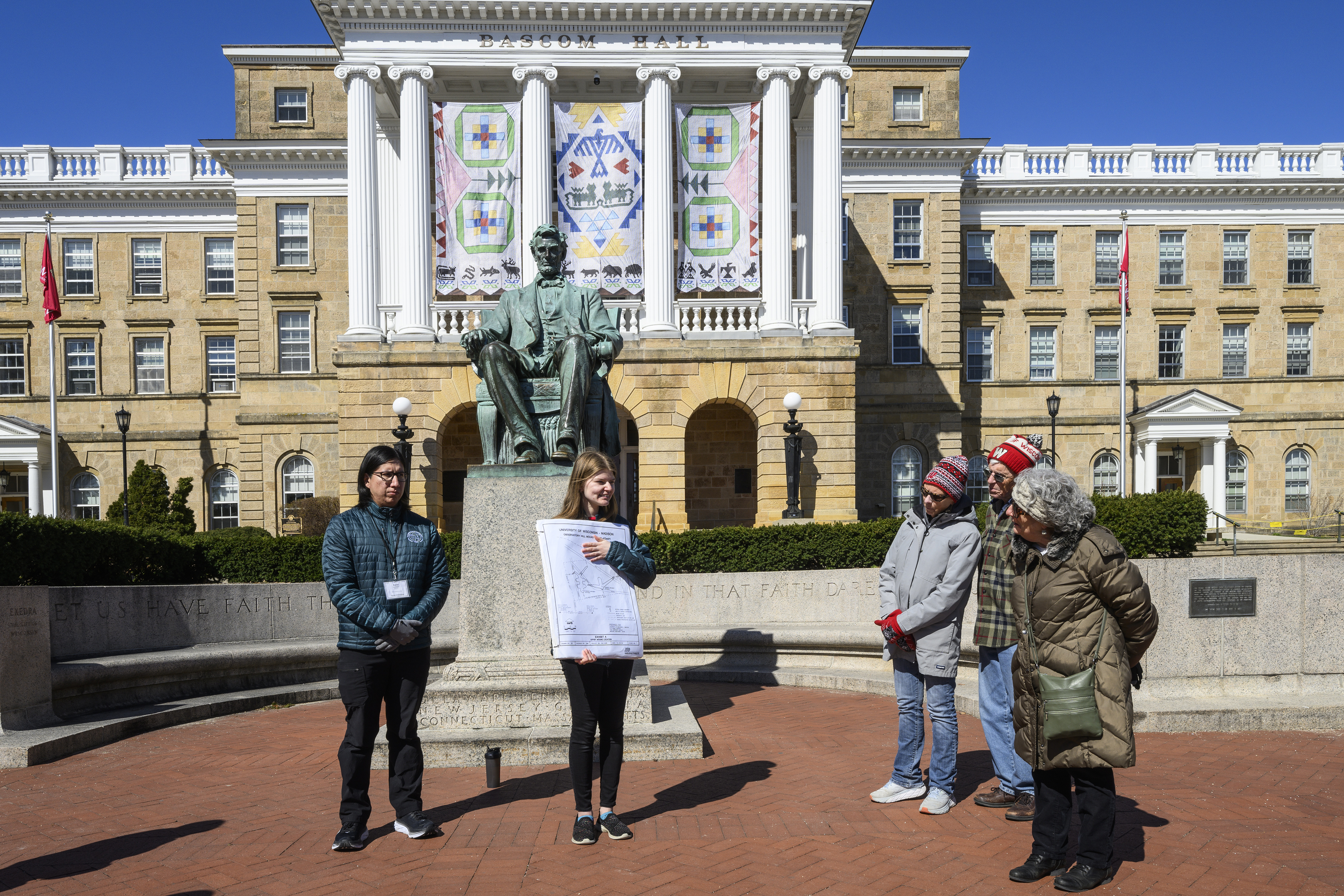
First Nations Cultural Landscape Tour
Experience Teejop through a guided, place-based walking tour of the UW–Madison campus. The First Nations Cultural Landscape Tour explores the historic and contemporary Indigeneity of Teejop through the land, water, campus buildings, historical markers, and archaeological sites.
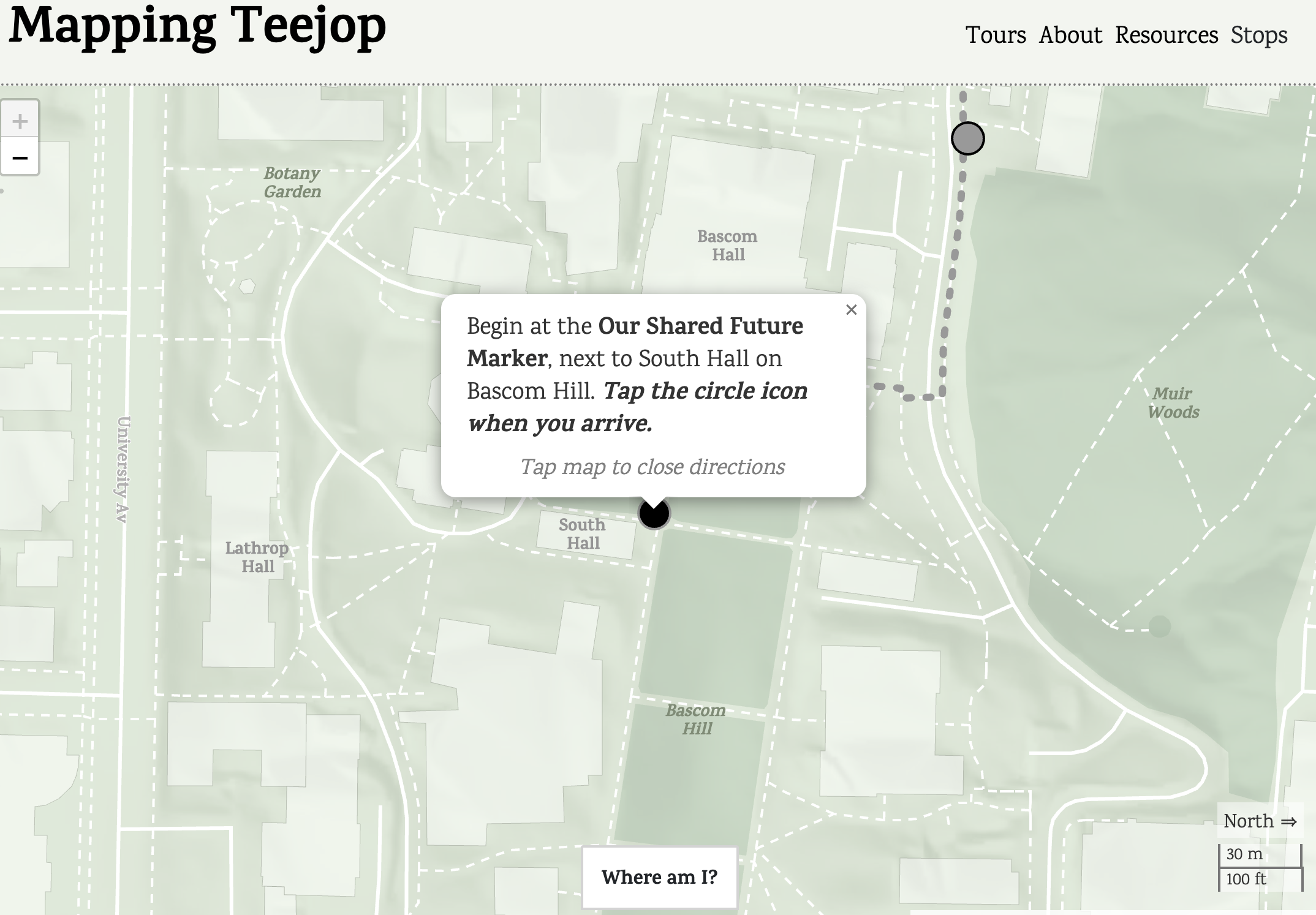
Mapping Teejop
Explore Indigenous history and presence on campus from anywhere through Mapping Teejop, a digital mapping project created through a partnership between American Indian & Indigenous Studies and the UW–Madison Cartography Lab. The virtual walking tours explore Ho-Chunk and Native history through familiar campus places, including Bascom Hill, Observatory Hill, Lake Mendota, Camp Randall, and Memorial Union.